01
Evaluation becomes automatic
AI takes over the measuring you used to do by hand, one image at a time. More images no longer means more effort.
We quantify optical and electron microscope images, so evaluation becomes automatic and no longer depends on who does it. Because the results stay as numbers, you can use them directly to compare conditions and analyze causes.
Ask about a PoC on your images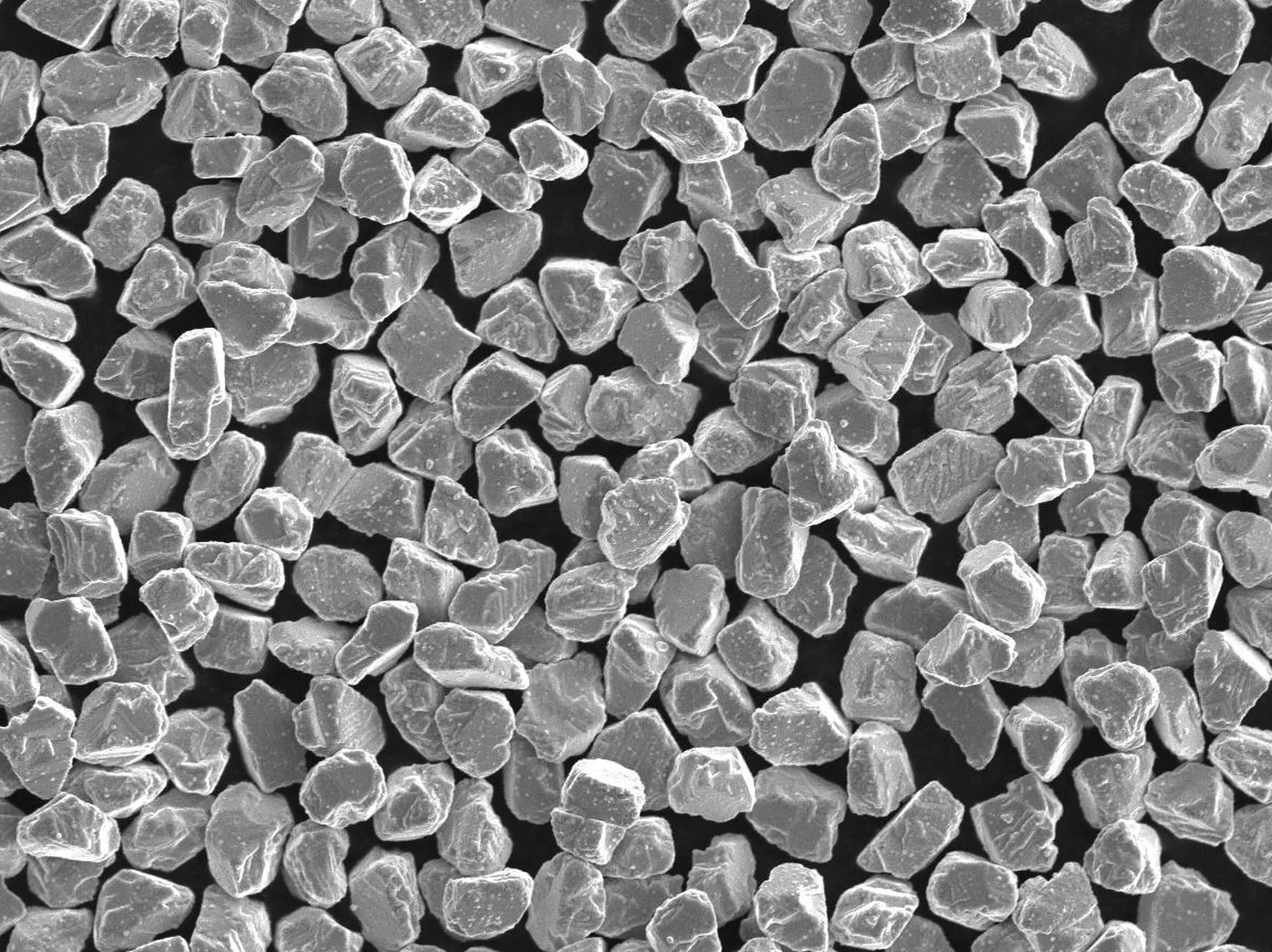
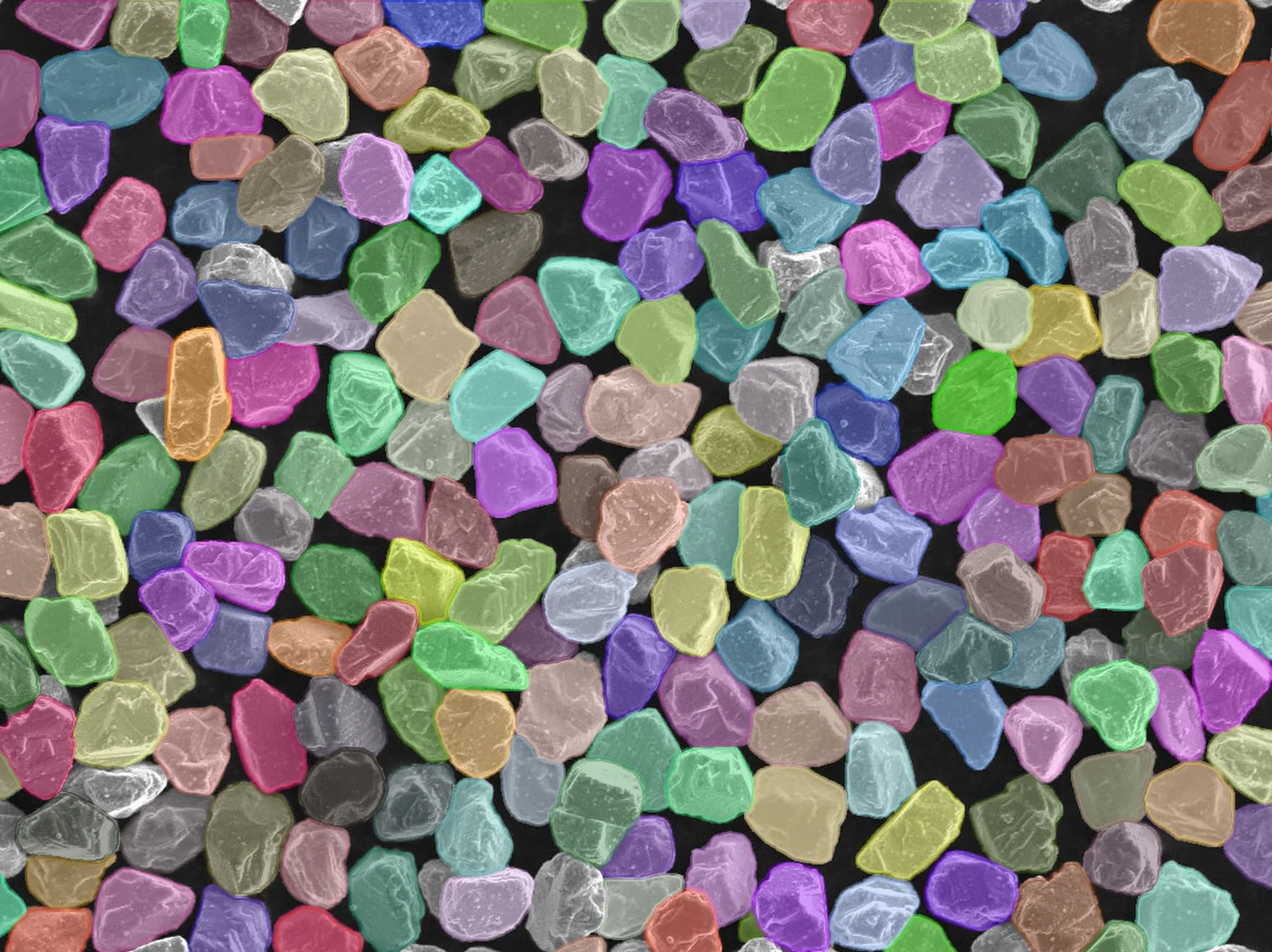
AI takes over the measuring you used to do by hand, one image at a time. More images no longer means more effort.
Visual judgment varies from person to person and from day to day. Replacing it with numbers produced on the same criteria gives the same result no matter who evaluates.
Numbers stay on record and can be compared side by side. Comparing conditions, correlating with material properties, tracking change over time: analyses that were not possible with images alone become possible.
Read itself has changed its product development and quality control with this analysis. See the next section.
Read is a diamond tool manufacturer. The shape of abrasive grains determines how a tool performs, and we used to evaluate it by looking at electron microscope images and tracing outlines by hand. It took time, and the results varied by person.
So our development, design and quality assurance teams worked together to build a way to turn shape into numbers with AI. Morfolia makes the evaluation process we have used in-house available to others.
We line up candidate grains by their shape numbers to select them.
We record the shape of each incoming lot as numbers, which helps keep quality stable.
Shape evaluation that relied on rules of thumb became data that teams can share.
Which materials, and what we turned into numbers.
Fiber diameter distribution
Electron microscope (SEM)Scratch detection
Electron microscope (SEM)Particle dispersion
Optical microscopeParticle count and size
Optical microscopeFiber diameter trends
Electron microscope (SEM)Quantifying particle shape (used in our own product development)
Electron microscope (SEM)To try it, you send us images. Once it becomes part of your daily evaluation, we can deploy it inside your company, so you keep using it without sending analysis data outside.
You send us images, Read analyzes them and reports the results.
We tune the AI to your images, and add the measurement items you need.
We deploy the tuned AI inside your company. After deployment, your data stays in-house.
A few optical or electron microscope images are enough.
We show, with images and numbers, what could be quantified and how far.
After reviewing the results, you can continue with contract analysis or move to on-premises deployment.